About Bumthang
Bumthang — whose name translates as "Beautiful Field" — is Bhutan's spiritual heartland. Its four interconnected valleys (Chokhor, Tang, Ura, and Chumey) contain the highest concentration of ancient Buddhist temples and monasteries anywhere in the kingdom, many dating to the 7th century. This is where Buddhism first took deep root in Bhutan, and the sacred landscape is saturated with the presence of its greatest saints.
The master Guru Padmasambhava (Guru Rinpoche) visited Bumthang's Chokhor valley in the 8th century to cure a local king of a mortal illness, and left his body imprint in stone at a cave that is now the sacred heart of Kurje Lhakhang. Pema Lingpa — Bhutan's greatest treasure-revealer and a figure of central importance to the entire Nyingmapa tradition — was born in Bumthang in 1450; his family lineage connects to the present royal dynasty, and his monasteries and revealed teachings remain living practice here.
At 2,600–3,100m, Bumthang sits in the alpine zone — the climate is crisp, the air clean, the pine forests dense. The Chokhor Valley main town of Jakar has a frontier character: wide gravel roads, traditional painted shopfronts, a handful of excellent guesthouses, and a Swiss cheese factory and craft brewery that seem to have arrived from another time. But behind the main street, the density of sacred history is extraordinary — within a single day's cycling you can visit temples built across six different centuries.
Gallery
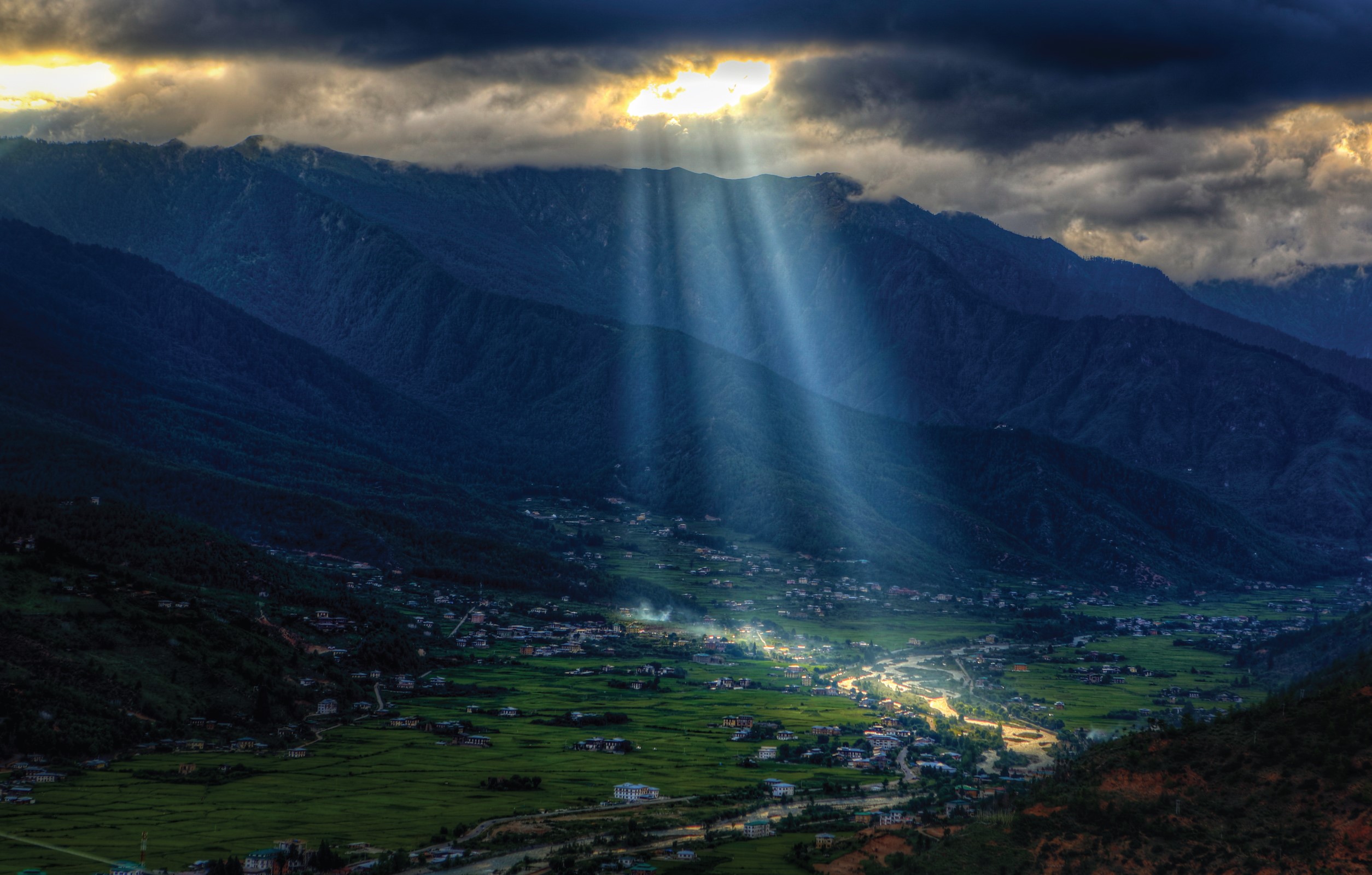


Bumthang's Four Valleys
Bumthang is not a single valley but four distinct valleys, each with its own character, altitude, and sacred significance.
Chokhor Valley — Heart of Bumthang
The main valley, home to Jakar town and the greatest concentration of temples — Kurje Lhakhang, Jambay Lhakhang, Tamshing Monastery, and Jakar Dzong. Most visitors base themselves here. The valley floor follows the Chamkhar Chhu river through farmland and pine forest. Flat and well-suited to cycling. The best starting point for all Bumthang exploration.

Tang Valley — Burning Lake & Palaces
The most remote of the four valleys, reached via a narrow mountain road east of Jakar. Home to the sacred Mebar Tsho (Burning Lake), the ancient Ugyen Choling Palace, and extraordinary rural scenery. A full-day excursion from Jakar, best combined with a hike to the palace museum. Largely untouched by tourism.

Ura Valley — The Medieval Village
At 3,100m — the highest of the four valleys — Ura is Bhutan's most perfectly preserved medieval village: around 50 traditional houses clustered along cobbled lanes, a central temple, and a community of farmers and herders whose way of life has changed little in centuries. The annual Ura Yakchoe festival in spring is remarkably intimate. A half-day drive from Jakar.

Chumey Valley — Yathra Weaving
The southernmost and most accessible of the four valleys, home to Bhutan's finest woollen yathra textile tradition. The Yathra Production Centre in Chumey allows visitors to watch weavers at work and purchase directly. The valley is also known for its apple orchards and buckwheat fields — the most pastoral and agricultural of the four.
Top Attractions
Bumthang rewards slow exploration — the most significant temples are close together in Chokhor Valley, while the outer valleys require dedicated excursions. Allow 3–4 days.
Kurje Lhakhang — Guru Rinpoche's Body Imprint
One of the most sacred sites in all of Bhutan — a three-temple complex built around the cave where Guru Padmasambhava meditated in the 8th century and left his body imprint (kurjey) in the rock. The oldest temple is built directly over the cave; the second was constructed by the first King of Bhutan in 1900; the third is a modern place of prayer. A 100-chorten ring surrounds the complex. A tree in the courtyard is believed to have grown from Guru Rinpoche's walking staff. Entry to the cave is only permitted during the annual Kurje Tshechu. One of the holiest places in the Himalayan Buddhist world.
Jambay Lhakhang — 659 CE
One of the oldest temples in the entire Himalayan region, built in 659 CE by the Tibetan King Songtsen Gampo as one of 108 simultaneous temples constructed in a single night to pin down a demoness obstructing the spread of Buddhism. Jambay was placed to subdue the demoness's left knee. Inside are over 100 statues including the future Buddha Maitreya (Jowo Jampa), a wheel of time (Kalachakra) built by the first King of Bhutan in 1887, and a chorten housing a statue carved from the 22nd Je Khenpo's tooth. The annual Jambay Lhakhang Drup festival (October–November) is famous for its unique fire ritual and midnight naked dance.
Tamshing Monastery — Pema Lingpa's Legacy
Founded in 1501 by the great treasure-revealer Pema Lingpa — Bhutan's most revered Buddhist saint after Guru Rinpoche — Tamshing is the most important Nyingma monastery in Bhutan and a centre of living religious practice. Its walls are covered in ancient paintings, including depictions of 1,000 Buddhas and 21 Taras, largely unchanged since the 15th century. The inner sanctum contains three thrones for the three incarnations (body, mind, speech) of Pema Lingpa. Tamshing sits directly across the river from Kurje Lhakhang — easily combined in a single visit. A heavy chain believed to have been worn by Pema Lingpa is available to carry around the temple as a purification practice.

Jakar Dzong — Castle of the White Bird
Sitting on a broad ridge above Jakar town with commanding views over the Chokhor valley, Jakar Dzong was originally built in 1549 after a white bird was spotted landing on the proposed ridge — seen as an auspicious sign. Enlarged and reinforced over subsequent centuries, it remains one of Bhutan's largest dzongs. It served as the official residence of Bhutan's first king (Ugyen Wangchuck was crowned here in 1907) and remains both an administrative centre and active monastery. A pleasant uphill walk from town; monks are regularly seen going about their daily practice.
Mebar Tsho — The Burning Lake
One of Bhutan's most mysteriously sacred sites — a dark, narrow gorge in the Tang Valley where the Chamkhar Chhu flows through a rocky canyon, its swirling black pools hung about with prayer flags and butter lamps. According to legend, the great treasure-revealer Pema Lingpa plunged into the lake with a burning butter lamp that remained lit underwater, emerging with a sacred treasure-chest (terma) concealed by Guru Rinpoche — thereby proving his divine mandate as a revealer. The river pools here are genuinely eerie and powerfully atmospheric, even in bright daylight.

Ugyen Choling Palace Museum
A remarkable 16th-century palace above the Tang Valley floor, built by the Trongsa Penlop Tshokey Dorji and still owned by a noble Bhutanese family who have converted it into a fascinating private museum documenting the daily life of the Bhutanese aristocracy. The collection includes ceremonial regalia, household items, religious objects, and personal memorabilia spanning several centuries. The 45-minute uphill walk from the valley road passes through rice terraces and farmland — combine with the Burning Lake for a full Tang Valley day.
Things to Do
Cycling the Chokhor Valley
The flat valley floor of Bumthang's Chokhor Valley is perfectly suited to bicycle exploration — within a 10km radius you can visit Kurje Lhakhang, Jambay Lhakhang, Tamshing Monastery, Jakar Dzong, Wangdicholing Palace, and the Swiss cheese factory entirely by bicycle. Bikes are available to hire in Jakar town (BTN 300–500/day). The pine-scented valley roads, traditional farmhouses, and absence of traffic make this one of the most pleasant cycling experiences in the entire Himalayas.
Jambay Lhakhang Drup Festival (Oct–Nov)
One of the most extraordinary festivals in Bhutan — held over five days at Jambay Lhakhang, it culminates in two unique rituals rarely seen elsewhere in the Buddhist world: the Mewang (fire purification ceremony) in which worshippers walk through and over burning embers to receive protection from disease and ill fortune, and the Tercham (naked dance), performed in darkness by torchlight at midnight by masked dancers who are believed to be possessed by deities. The contrast with the daytime sacred mask dances makes this the most multi-dimensional festival experience in Bhutan.
Bumthang Owl Trek (2 days)
A beautiful two-day moderate trek beginning from Manchung village, crossing the Drangela Pass through dense forests of bamboo, juniper, blue pine, and rhododendron, and descending via Tharpaling Monastery — an ancient retreat centre at 3,600m founded by the philosopher-saint Longchen Rabjampa in the 14th century. The trail passes through pristine alpine terrain with spectacular views of Gangkar Puensum. Camping or village homestays en route. Guide required.
Horse Riding at Wind Horse Ranch
One of Bhutan's most distinctive activity offerings — Wind Horse Ranch in the Tang Valley offers guided horse treks through the valley's meadows, forests, and farmland on well-trained Bhutanese ponies. Half-day and full-day rides available; experienced and beginner riders both catered for. The backdrop of mountains and pine forest makes for extraordinary riding conditions. Book in advance; limited availability. One of the few places in Bhutan where horseback is still a genuine way to experience the landscape.
What to Eat & Buy in Bumthang
Bumthang's highland location and Swiss development influence have produced one of Bhutan's most distinctive and surprising culinary scenes — buckwheat dishes, craft beer, and genuine Swiss cheese alongside ancient Bhutanese cooking.
Buckwheat Puta & Khuli
Bumthang's signature food — buckwheat is grown abundantly in the cool valleys and forms the base of puta (noodles), khuli (pancakes), and jangbali (pasta). Try all three at the Buckwheat House near Jakar Lhakhang — Bumthang indigenous organic food at its finest.
Swiss Cheese Factory
Established in 1971 by a Swiss development worker, Bhutan's only cheese factory produces Gouda-style wheels and semi-hard cheeses using milk from highland herds. The dairy is a short walk from Jakar town; tours available; cheese sold directly. Surreal, delicious, and entirely authentic.
Red Panda Beer
Bumthang Brewery produces Bhutan's most celebrated craft beers — Red Panda Weiss and Dark Lager, brewed with glacial water and highland barley. Available at the brewery tap room in Jakar and at most local restaurants. A genuine craft product in one of Asia's most remote valleys.
Apple Cider & Wine
Bumthang's cool climate produces exceptional apples — the Chumey Valley apple orchards yield a range of ciders and fruit wines that are bottled and sold locally. The apple wine available at local shops is lightly sparkling and a natural complement to buckwheat dishes.
Yathra Woollen Textiles
Chumey Valley's distinctive bold-striped woollen yathra cloth — woven on traditional back-strap looms in geometric patterns and natural dyes — is available at the Yathra Production Centre. Among the finest craft purchases available anywhere in Bhutan.
Wild Honey & Herbs
Bumthang's forests yield wild honey collected by local families in traditional woven hive boxes. Forest herb teas using juniper, rhododendron, and medicinal plants are available at local guesthouses. Both make exceptional edible souvenirs.
When to Go & Practical Info
⭐ Spring (Apr–May)
Rhododendrons peak, Ura Yakchoe festival in April. Clear views and warm days.
Summer (Jun–Aug)
Lush green forests. Kurje Tshechu in June. Occasional rain but manageable.
⭐ Autumn (Oct–Nov)
Jambay Lhakhang Drup — Bhutan's most dramatic festival. Golden light and clear skies.
Winter (Dec–Feb)
Cold and potentially snowy but deeply peaceful. Black-necked cranes in central Bhutan.
Getting Here
- ~5 hours from Punakha (via Wangdue + Trongsa)
- ~3 hours from Trongsa
- Seasonal domestic flights: Bathpalathang Airport
- Road quality good but mountain driving — allow full travel days
Where to Stay
- Luxury: Uma Bumthang (COMO)
- Mid-range: Jakar Village Lodge, Wangdicholing Resort, Kaila Hotel
- Budget: several clean guesthouses in Jakar town from $35/night
- Homestays available in Tang and Ura valleys
Climate & Packing
- Elevation 2,600–3,100m — always bring warm layers
- Summer evenings cool; winter nights below zero
- Rain jacket essential year-round
- Altitude acclimatisation — take Day 1 gently
Tips
- Minimum 3 days to do Bumthang justice — 4 is better
- Hire a bicycle for Chokhor Valley and explore at your own pace
- Book festival dates (especially Jambay Drup) 4–6 months in advance
- Jakar town has good ATMs, reasonable restaurants, a proper pharmacy
Related Destinations

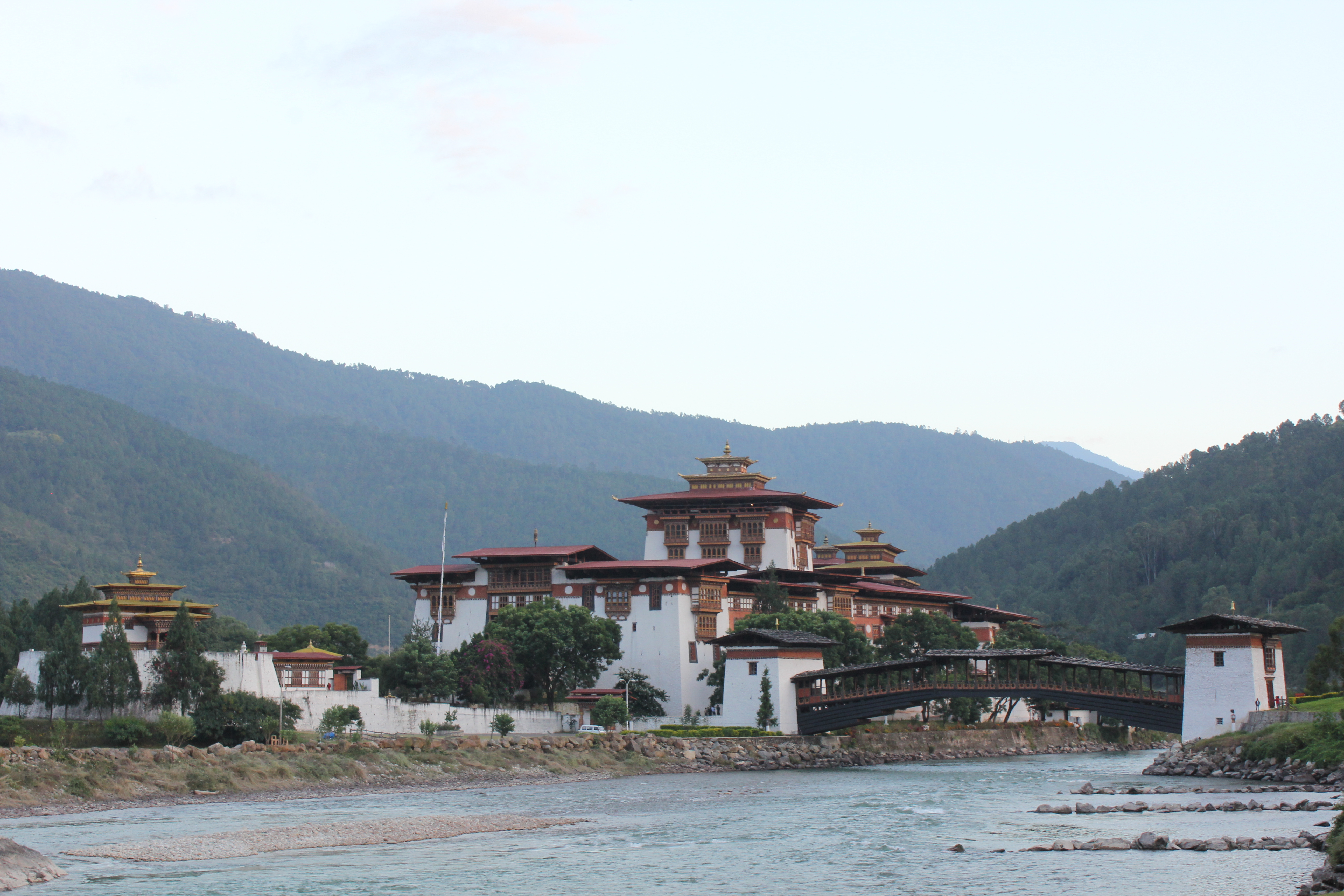

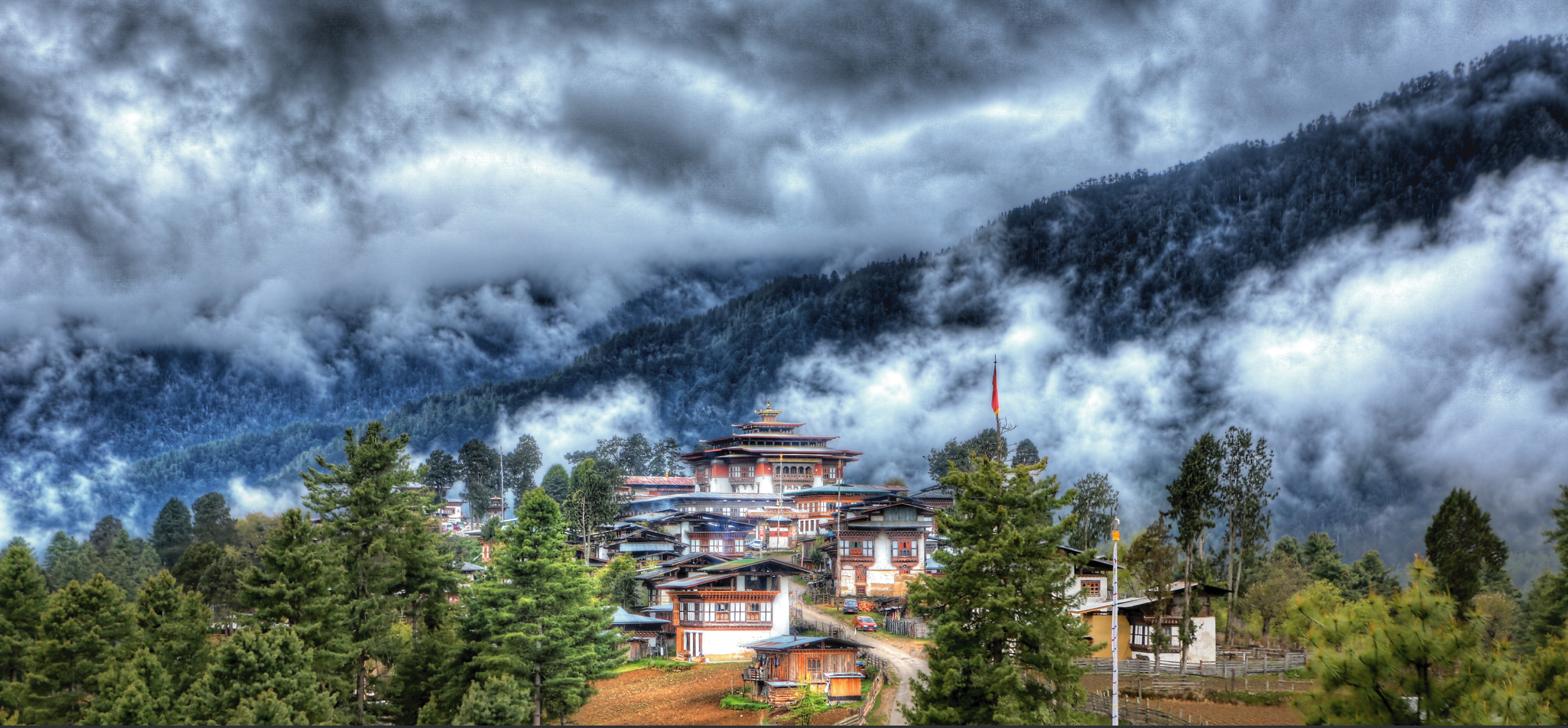
Journey to Bhutan's Spiritual Heart
Four sacred valleys, 1,300-year-old temples, a burning lake, Swiss cheese, craft beer, and the most extraordinary festival fire ritual in the Himalayas — Bumthang is where Bhutan's soul lives.