About Paro
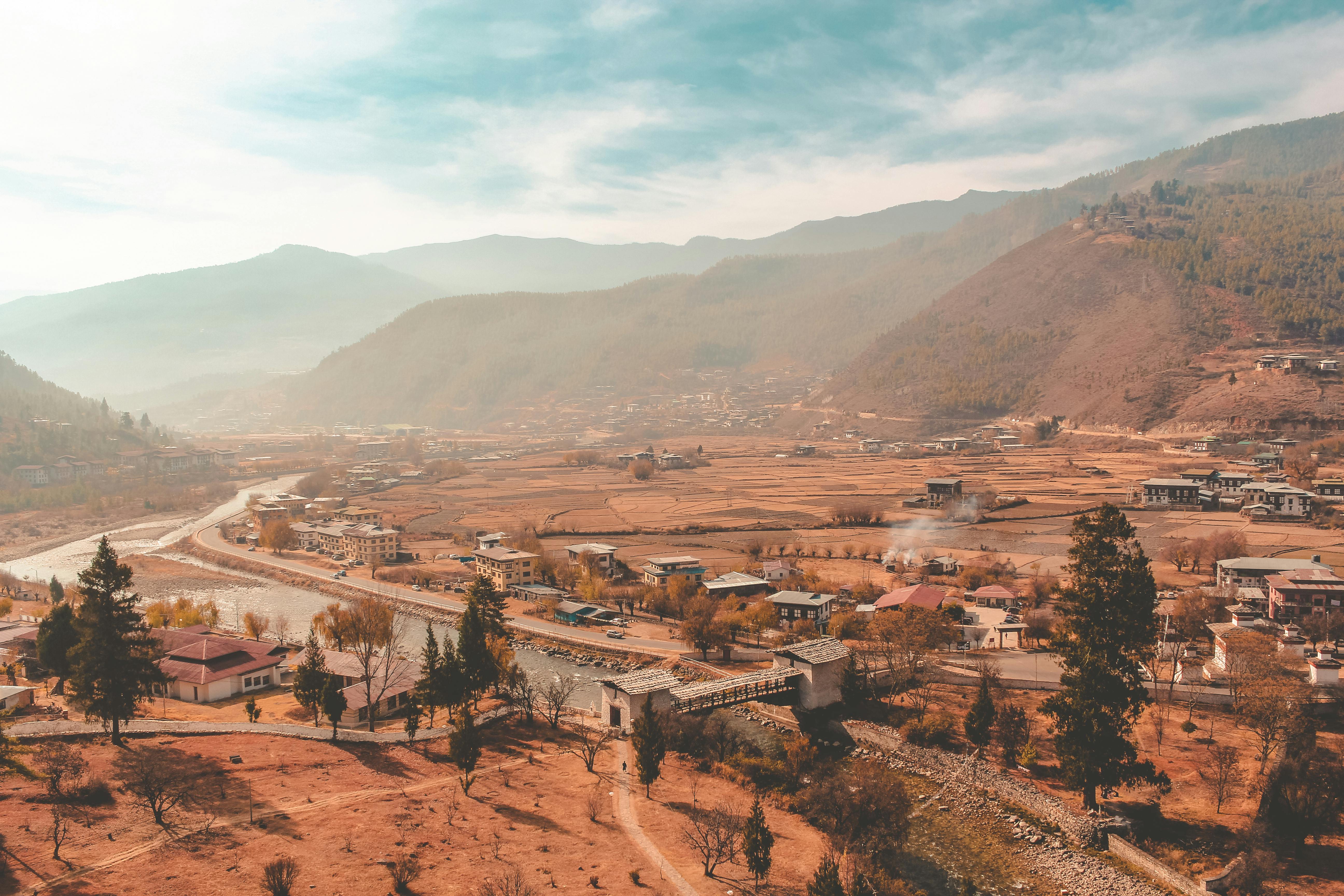
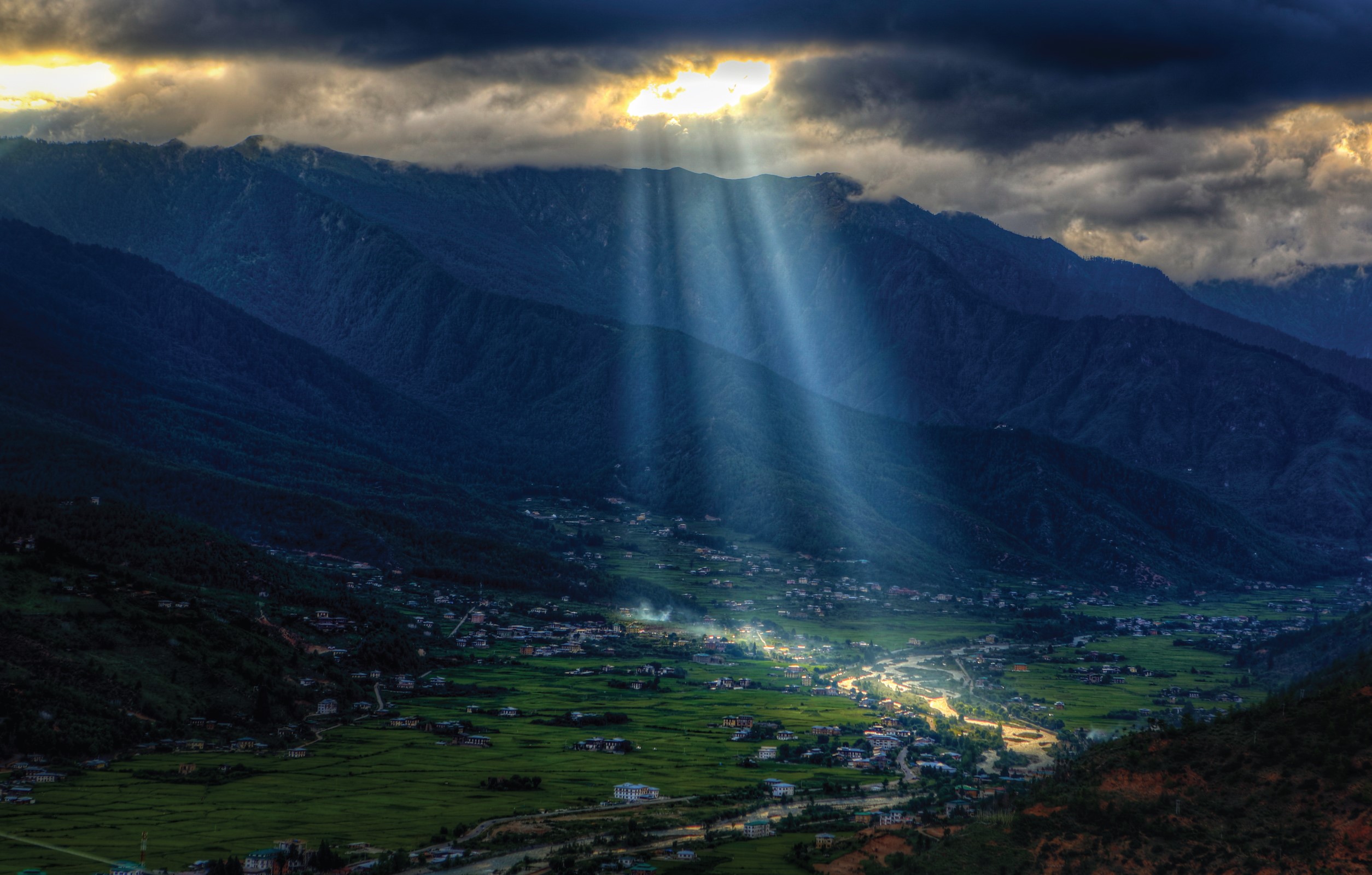
Paro Valley is where every visitor to Bhutan arrives, and where most leave — a broad, deeply fertile valley at 2,200 metres, watered by the turquoise Paro Chhu river, flanked by forested ridges and watched over by the ruins of an ancient fortress and the spires of the dzong on its hilltop above the town. The valley floor is a patchwork of terraced rice fields and apple orchards; the upper valley is one of the most dramatic high-altitude landscapes in the Himalayas, culminating at the 7,326-metre summit of Mount Jomolhari.
The flight into Paro is one of the most spectacular in the world — only eight specially certified pilots are authorised to land at its narrow runway, flanked by mountains on all sides. The approach twists between peaks and descends over terraced fields before touching down in what feels like the middle of a fairy tale. Those lucky enough to fly on a clear day see Jomolhari and the Himalayan chain from directly alongside.
Paro's greatest treasure is Taktsang Palphug Monastery — the Tiger's Nest — which clings to a sheer cliff face 900 metres above the valley floor with an audacity that still startles the eye after decades of photographs. But Paro is far more than its most famous attraction: a magnificent 17th-century dzong, Bhutan's oldest temple (7th century), the national museum, dramatic ruins of a border fortress, and a town of traditional painted wooden shopfronts and welcoming teahouses make it among the richest single destinations in the Himalayan region.
Gallery


Tiger's Nest — Taktsang Palphug Monastery
Clinging to a sheer granite cliff face 900 metres above the Paro Valley floor, Taktsang Palphug Monastery is Bhutan's most iconic landmark — and one of the most dramatic sacred sites in all of Asia. Every visit to Bhutan must include this hike.
The legend behind Taktsang is as extraordinary as its location. In 747 CE, the great Indian master Guru Padmasambhava — revered as the Second Buddha and the man who brought Buddhism to Bhutan — flew to this cliffside from eastern Bhutan on the back of a tigress (a manifestation of his consort, Yeshe Tsogyal). Here, disguised as the wrathful deity Dorje Drolo, he meditated for three years, three months, three weeks, and three days in a cave, subjugating the malicious spirits of the region. He then emerged in his eight divine manifestations, establishing the site as one of the most powerful sacred places in the Buddhist world.
The first physical temple structure was built around the cave in 1692 by Gyalse Tenzin Rabgye. Most of the current complex — four main temples surrounding the original meditation cave — was meticulously reconstructed after a devastating fire in 1998 and reopened in 2005 under the direction of Bhutan's fourth king. The only relic to survive both the 1998 fire and an earlier 1951 blaze is the sacred Guru Sungjonma statue — believed to have spoken aloud and transported itself miraculously to the monastery.
There are currently four interconnected temples with stairs cut into the cliff face and a dramatic waterfall-fed gorge to cross via a bridge at mid-point. The interiors contain some of the finest painted murals in Bhutan — intricate depictions of Buddhist deities, cosmological diagrams, and the life of Guru Rinpoche. Photography is not permitted inside any of the chapels.
More Top Attractions
Paro's valley holds a remarkable constellation of historic sites beyond Tiger's Nest — many visitors are surprised to find a full two days of extraordinary sightseeing at ground level alone.
Rinpung Dzong — Fortress of the Heap of Jewels
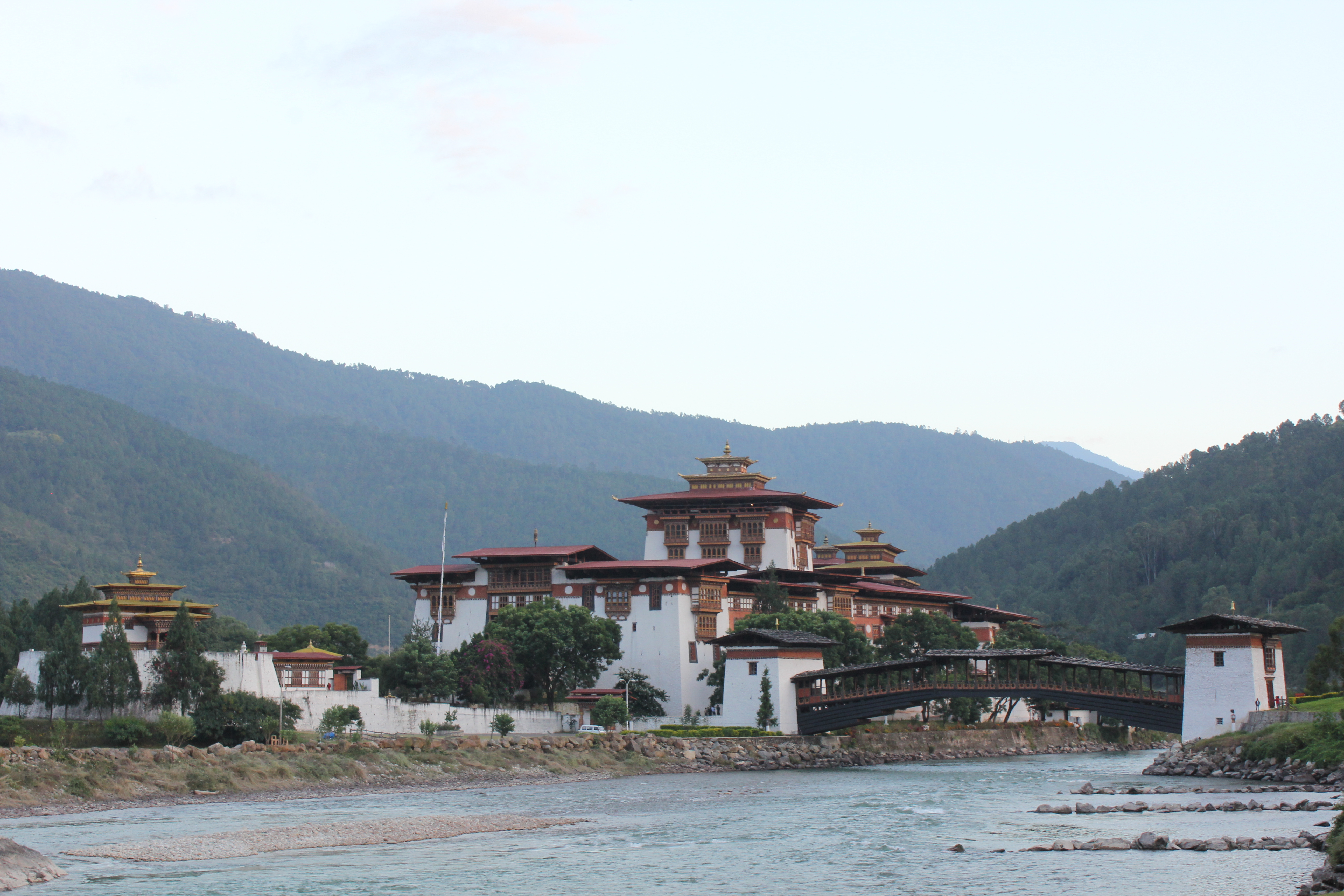
Rising magnificently above the Paro Chhu river at the approach to town, Rinpung Dzong — "Fortress of the Heap of Jewels" — was built by Zhabdrung Ngawang Namgyal in 1645 and is one of the finest examples of traditional Bhutanese architecture in the country. Its massive whitewashed walls, elegantly tiered roofs, and dramatically cantilevered interiors house 14 temples and shrines, including statues of Guru Rinpoche, Shakyamuni Buddha, and Zhabdrung himself. The dzong is reached via a traditional covered wooden bridge. During the Paro Tshechu, the entire forecourt fills with thousands of worshippers in brilliant traditional dress.
Kyichu Lhakhang — 659 CE
One of the oldest and most sacred temples in Bhutan, built in 659 CE by the great Tibetan King Songtsen Gampo as one of 108 temples constructed simultaneously across the Himalayan region to pin down the limbs of a monstrous earth-demoness obstructing the spread of Buddhism. Kyichu was placed to subdue her left foot. The main shrine houses a large statue of Jowo Sakyamuni believed to be a replica of the original Buddha who lived in the 6th century BCE. In the courtyard, two orange trees bear fruit throughout the entire year — considered miraculous, as oranges don't normally fruit year-round at this altitude.

National Museum of Bhutan (Ta Dzong)
Housed in the remarkable circular Ta Dzong — the watchtower above Rinpung Dzong, built in 1649 — the National Museum is the finest museum in Bhutan. Its six floors of permanent galleries display ancient thangka paintings, natural history specimens, rare costumes and textiles, traditional weapons and armour, sacred ritual objects, and the world's most comprehensive collection of Bhutanese postage stamps. The spiral architecture of the round tower creates a unique and atmospheric gallery experience. Some of the oldest paintings in the collection date to the 13th century. Open Tuesday–Sunday; photography restricted.
Drukgyal Dzong Ruins & Jomolhari View
At the upper end of Paro Valley, 16km from town, the dramatic ruins of Drukgyal Dzong sit on a rocky outcrop commanding views to Mount Jomolhari (7,326m) at the head of the valley. Built in 1649 by Zhabdrung Ngawang Namgyal to commemorate Bhutan's victory over a Tibetan invasion, the dzong burned in 1951 and was left as ruins. On clear days — most likely from October to March — the view of Jomolhari's snow-plastered summit from the ruins is one of the most dramatic mountain panoramas in Bhutan. A café nearby serves lunch with Jomolhari as the backdrop.

Tachogang Lhakhang & Iron Chain Bridge
One of Bhutan's most remarkable engineering relics — an ancient iron chain suspension bridge across the Paro Chhu, built by the legendary Tibetan iron-bridge builder and Buddhist saint Thangtong Gyelpo in the 15th century. Crossing its creaking, swaying span of iron links and wooden planks above the turquoise river is a genuinely thrilling experience. The bridge leads to the private Tachogang Lhakhang temple, still maintained by direct descendants of Thangtong Gyelpo himself. The site is one of the most atmospheric and undervisited places in all of Paro.

Dungtse Lhakhang
A uniquely structured 15th-century temple just outside Paro town, built by Thangtong Gyelpo (the same iron-bridge engineer-saint) in a rare three-storey chorten form — each floor representing a different realm: ground floor for nagas (water serpents), middle floor for human deities, and top floor for the enlightened. The interior murals, covering virtually every surface in intricate detail, are among the oldest and best-preserved in western Bhutan. The Paro Tshechu procession passes directly by this temple — excellent festival viewing spot.
Things to Do
Paro Tshechu Festival (March–April)
Held every spring in the courtyard of Rinpung Dzong, the Paro Tshechu is one of Bhutan's most famous and most celebrated festivals. Over five days, monks and laymen in elaborate masks and brocade costumes perform sacred Cham dances that dramatise episodes from Buddhist scripture and the life of Guru Rinpoche. The festival culminates in the pre-dawn unfurling of a giant thondrol thangka on the final morning — thousands gather in traditional dress to receive its blessing before it is rolled away until the following year. Book accommodation and tours 4–6 months in advance.
Jomolhari Base Camp Trek (8 days)
One of Bhutan's most celebrated treks, following the ancient trade route from the Drukgyal Dzong ruins up the Paro Chhu valley to the base of Mount Jomolhari (7,326m) at 4,080m. The trail passes through the villages of Sharna Zampa and Thangthangkha, through high alpine pastures and along river gorges, camping below Jomolhari's south face at Jangothang — one of the most dramatic high mountain campsites in Asia. Return via the Lingzhi route adds two more spectacular days. Requires guide, pack horses, camping equipment, and advance permit.
Archery Practice with Locals
Archery is Bhutan's national sport and a deeply social activity — tournaments are accompanied by songs, dances, and animated banter. Paro has several archery grounds where local teams practise daily and tournament matches take place on weekends. Many tour operators offer hands-on archery lessons with local champions — traditional Bhutanese bows at targets set 140 metres apart (three times the Olympic distance). Extraordinarily difficult, enormously fun, and entirely authentic.
Druk Path Trek (5–6 days)
A beautiful mountain traverse connecting Paro to Thimphu via high-altitude lakes, ancient monasteries, and forest ridges — passing above 4,000m through pristine alpine terrain. The route begins from the Ta Dzong above Rinpung Dzong and ends near Tango Monastery in Thimphu, passing Jili Dzong, Lake Jimiling Tsho, and Phajoding Monastery along the way. One of the best moderate treks in Bhutan, combining great mountain scenery with cultural and historical depth.
When to Go & Practical Info
⭐ Spring (Mar–May)
Paro Tshechu in March–April. Rhododendrons bloom. Excellent visibility.
Summer (Jun–Aug)
Lush green valley. Occasional rain. Tiger's Nest trail can be slippery.
⭐ Autumn (Sep–Nov)
Best mountain views. Crisp air. Jomolhari most visible in October–November.
Winter (Dec–Feb)
Cold but very clear. Jomolhari views superb. Fewer tourists on Tiger's Nest trail.
Arriving
- Paro International Airport (PBH) — only airport in Bhutan
- Druk Air and Bhutan Airlines only
- Connections: Bangkok, Delhi, Kathmandu, Singapore, Dhaka
- Only 8 certified pilots authorised to land here
Where to Stay
- Luxury: Amankora Paro, Uma Paro (COMO), Zhiwa Ling Heritage
- Mid-range: Tashi Namgay Resort, Kichu Resort
- Budget: several guesthouses from $40–60/night
- Book 4–6 months ahead for Paro Tshechu season
Tiger's Nest Logistics
- Start hike at 7–8am to beat heat and crowds
- Hire a horse to the first viewpoint ($15–20)
- Entry fee ~$15 USD, paid at main gate
- Allow 4–6 hours total for the round trip
Tips
- 3 days minimum to do Paro justice
- Rinpung Dzong: visit at 9am when it opens
- Kyichu Lhakhang: afternoons are peaceful and uncrowded
- Upper valley (Drukgyal Dzong) best Oct–Mar for Jomolhari views
Related Destinations

Bhutan Begins in Paro
Every journey through the Kingdom of the Thunder Dragon starts and ends here — in the valley beneath the world's most dramatic monastery.