About Punakha
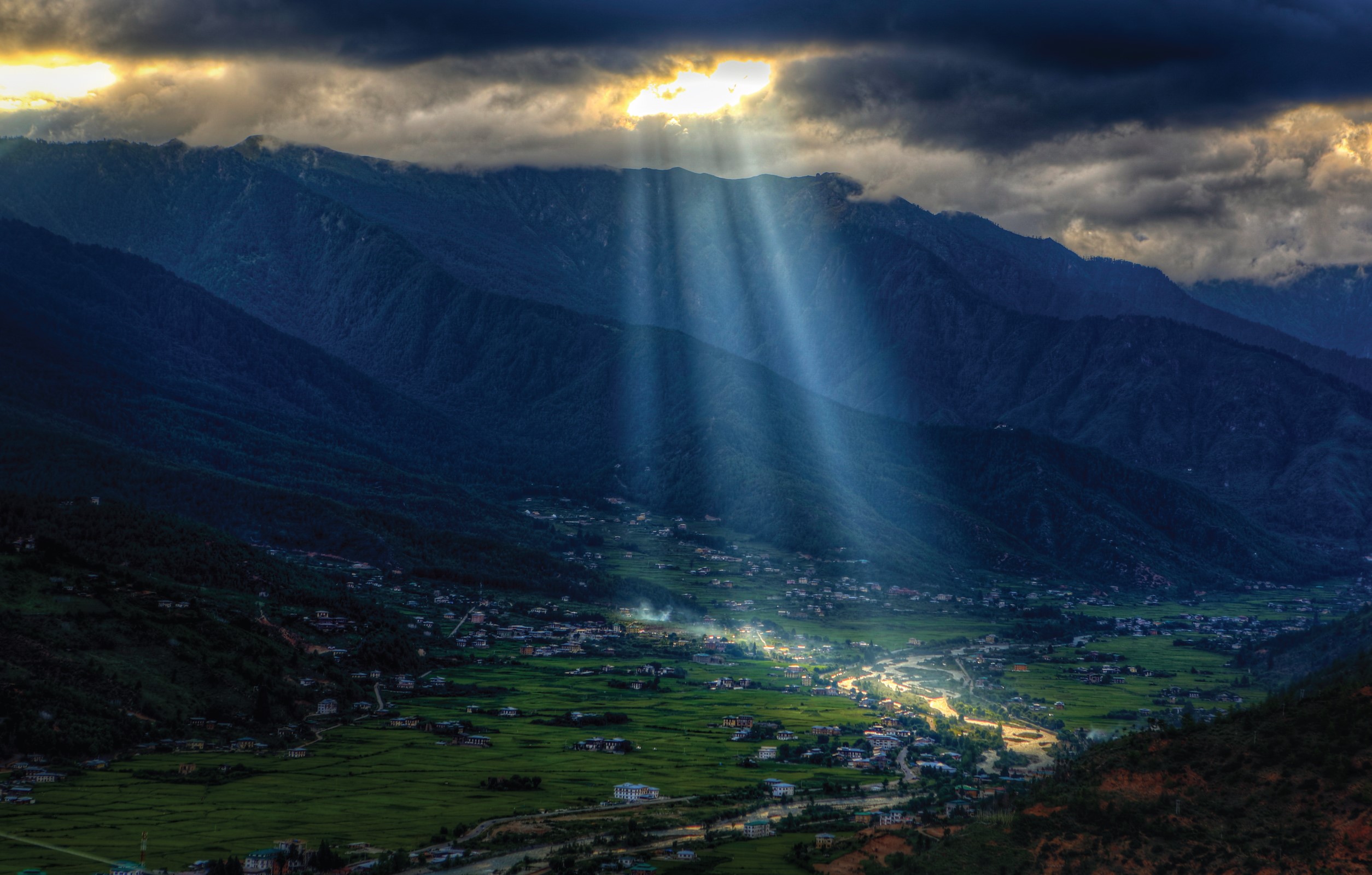
Punakha occupies a valley that feels touched by a different kind of grace. At just 1,200 metres — significantly lower and warmer than Thimphu or Paro — it enjoys a subtropical climate that produces lush rice terraces, orchards of mandarin oranges and bananas, and in spring, the streets and dzong fringes draped in purple jacaranda blossom. The central monastic body moves here from Thimphu each October and returns in April, following the same seasonal migration it has made for centuries.
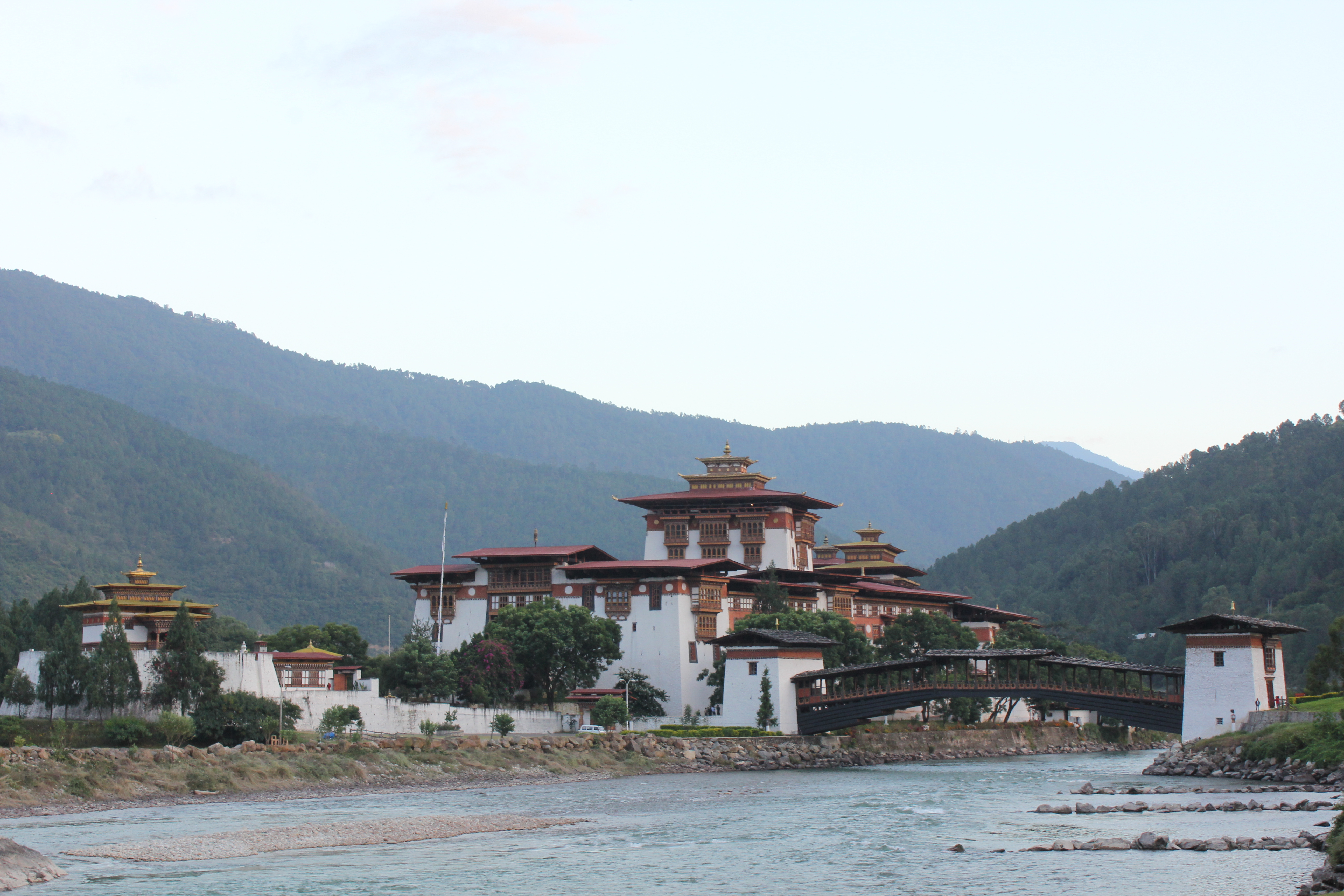
Punakha was the capital of Bhutan from 1637 until 1955, and it remains the country's ceremonial and spiritual heart. Every King of Bhutan has been crowned in Punakha Dzong; the fifth king's royal wedding was held here in 2011. The dzong itself — Pungthang Dewa Chhenbi Phodrang, "the Palace of Great Happiness" — sits at the confluence of the Mo Chhu (Female River) and Pho Chhu (Male River), their meeting seen as an embodiment of divine masculine and feminine balance. The architectural setting is arguably the most photogenic of any building in the Himalayas.
Beyond the dzong, the Punakha valley offers an extraordinary concentration of cultural and natural experiences: the famous Temple of Fertility, a hilltop chorten reachable by a rice-terrace hike, one of Bhutan's longest suspension bridges, white-water rafting on glacial rivers, and the spectacular mountain pass of Dochula at 3,100m on the road from Thimphu. Most visitors include Punakha on a standard western circuit, but it rewards a full day of slow exploration.
Gallery


Top Attractions
Punakha's sights are compact enough to cover in a full day, but deep enough to reward a slower, two-day exploration of the valley.
Punakha Dzong — Palace of Great Happiness
Built by Zhabdrung Ngawang Namgyal in 1637–38, Punakha Dzong is the second oldest and arguably the most beautiful dzong in Bhutan — its massive whitewashed walls and golden roofs rise directly from the confluence of two rivers, reflected in their clear waters. The dzong's three courtyards progress from administrative spaces (a huge white stupa and bodhi tree in the first) through the monks' residences to the sacred innermost precinct where the embalmed body of Zhabdrung himself is preserved. The assembly hall contains soaring painted pillars, extraordinary murals of the Buddha's life, and three golden statues. Venue of every royal coronation since 1907 and the royal wedding of 2011.
Chimi Lhakhang — Temple of Fertility
Sitting on a small hillock in the rice fields near Lobesa village, Chimi Lhakhang is Bhutan's most uniquely spirited temple. Built in 1499 and dedicated to the Divine Madman Drukpa Kunley — a revered Buddhist saint who taught through provocation, songs, and scandalous humour — it is famous throughout Bhutan as a place of fertility blessing. Childless couples come from across the country (and beyond) seeking a monk's blessing, traditionally delivered with a wooden phallus brought by Drukpa Kunley from Tibet. The walk to the temple crosses rice paddies and passes houses painted with phallic symbols — a Bhutanese protective tradition. One of the most visited and most distinctive places in the entire country.
Khamsum Yulley Namgyal Chorten
Built by the Third Queen Mother of Bhutan over eight years (1992–1999) to remove negative energies and promote world peace, this spectacular four-storey chorten crowns a hilltop above the Mo Chhu valley. The 30–45 minute hike to reach it crosses a suspension bridge, passes through emerald rice terraces, and climbs pine-forested slopes — the journey is as beautiful as the destination. From the chorten's upper levels, panoramic views extend across the entire Punakha valley and toward the distant snowfields of Gasa. The interior contains extraordinary Tantric religious art on all four floors. Free entry; open daily.

Dochula Pass — 108 Chortens
Every road from Thimphu to Punakha crests the magnificent Dochula Pass at 3,100m — one of the most celebrated viewpoints in Bhutan. On clear days, nine Himalayan peaks are simultaneously visible, including Gangkar Puensum (7,570m), the world's highest unclimbed mountain. The 108 Druk Wangyal Chortens, built by the eldest Queen Mother to commemorate Bhutanese soldiers, cluster on the hilltop alongside the Druk Wangyal Lhakhang temple with its remarkable modern murals. A mandatory stop on any Thimphu–Punakha journey — ask your driver to stop on both the outward and return trips as the light and visibility change dramatically.
Punakha Suspension Bridge
At 160 metres, one of the longest suspension bridges in Bhutan — a swaying, prayer-flag-draped span across the Mo Chhu river that connects the dzong precinct to the trail leading to Khamsum Chorten. The bridge provides some of the finest eye-level views of Punakha Dzong from mid-span, looking along the river to the fortress rising between the mountains. Even for those not hiking to the chorten, crossing the bridge is worth the 15-minute return trip for the photography and the views alone. Hold the railings if you're nervous about heights.

Talo Village & Monastery
Perched at 2,800m on a mountain ridge high above the valley, the ancient village of Talo is renowned in Bhutan for two things: the pristine cleanliness of its cobbled lanes and terraced gardens, and the extraordinary views of the entire Punakha valley from its monastery's forecourt. Talo Goenba, an ancient spiritual centre, stands guard over the valley in a setting of pine forest and prayer flags. The drive and short walk up are steep but rewarding — a wonderful contrast to the warm, lowland valley floor.
Things to Do
White Water Rafting on Mo Chhu
The glacial Mo Chhu and Pho Chhu rivers offer some of the most exciting white-water rafting in Bhutan — Grade II–III rapids through gorges inaccessible by road, with the dzong eventually coming into view as you approach the confluence. Half-day trips are most popular (around 8km from launch to takeout near the dzong). The rivers run fastest and most excitingly in spring (March–June) when snowmelt is at its peak. Arrange through your tour operator; all equipment provided.
Punakha Domchoe & Tshechu Festival
The Punakha Domchoe is one of Bhutan's most unusual and dramatic festivals, commemorating the 17th-century battle in which Bhutanese warriors defeated a Tibetan invasion. Held over three days in February–March, it features a remarkable re-enactment of the battle by warriors dressed in traditional armour, storming the dzong in a ceremonial charge. The following day's Punakha Tshechu brings the standard sacred mask dances. The combination is uniquely spectacular — held in the most beautiful dzong setting in the country.
Rice Terrace Walk to Chimi Lhakhang
The 20-minute walk from the Lobesa road through terraced paddy fields to Chimi Lhakhang is one of the most pleasant valley walks in all of Bhutan. The path crosses a small wooden bridge and meanders through active farmland — in autumn the fields are gold with ripening rice, in spring they are brilliant green. Local families work the fields by hand using traditional ploughs. The walk is flat, easy, and a genuine window into the agricultural heartbeat of the Punakha valley.
Farmhouse Dinner & Bhutanese Cooking
Several farmhouse operations near Chimi Lhakhang and Lobesa village offer authentic home-cooked Bhutanese dinners and — with advance notice — cooking demonstrations and lessons. Learning to make ema datshi, momo dumplings, and red rice dishes in a traditional kitchen alongside a Bhutanese family is among the most warmly memorable experiences available to visitors. Ask your tour operator to arrange a genuine farmhouse dinner rather than restaurant dining on at least one evening in Punakha.
What to Eat
Punakha's warm, fertile valley produces some of Bhutan's finest agricultural ingredients — the ema datshi here uses locally-grown chilies and the freshest mountain water.
Mandarin Oranges
Punakha's low altitude and warm climate produce exceptional mandarin oranges — sold along the roadside in bags from October through March. Intensely sweet, deeply fragrant. Buy a bag at the Lobesa road junction.
Fresh Ema Datshi
Punakha valley chili has a distinctive sweet heat. Every restaurant and farmhouse serves it. The best versions use yak cheese sourced the same morning from highland herder families above the valley.
Traditional Butter Tea
At Chimi Lhakhang and the farmhouses around Lobesa, traditional suja butter tea is still served in clay cups — the most authentic version of this Himalayan staple you'll find outside of nomad country.
Bangchang (Home Brew)
A mildly fermented barley drink — light, slightly cloudy, and gently warming. Often offered at farmhouse visits and informal meals. Ask politely if you'd like to try it; receive it with both hands.
When to Go & Practical Info
⭐ Spring (Mar–May)
Jacaranda blooms purple beside the dzong — the most photogenic time of year. Domchoe festival in Feb–Mar.
Summer (Jun–Aug)
Warm and lush. Valley stays green and fertile. Rafting season at its best.
⭐ Autumn (Sep–Nov)
Rice harvest, golden terraces, clear mountain views. Monks arrive from Thimphu in October.
Winter (Dec–Feb)
Warmest major valley in Bhutan — pleasant even in January. Mandarin season. Festivals possible.
Getting Here
- 77 km / 2.5 hours from Thimphu (via Dochula Pass)
- ~130 km / 3.5 hours from Paro
- Standard route: Paro → Thimphu → Dochula → Punakha
- No domestic airport — road access only
Where to Stay
- Luxury: Six Senses Punakha, andBeyond Punakha River Lodge, Dhensa Resort
- Mid-range: Meri Puensum Resort, Damchen Resort
- Budget: guesthouses in Punakha town
- Book spring season and festival dates 3–4 months ahead
Photography Tips
- Best dzong views: from the footbridge or river bank at sunrise
- Jacaranda season: late March to early April
- Khamsum Chorten: mid-morning light best
- No photography inside dzong temples
Tips
- Pack light layers — warm days, cool evenings
- Dzong visits after 9am when it opens; guide required
- Hire a different guide for Khamsum hike vs Chimi — they know their local terrain
- Combine Punakha with Wangdue Phodrang (only 30 min away)
Related Destinations

Visit Bhutan's Palace of Great Happiness
Set where two sacred rivers meet, wrapped in jacaranda and surrounded by mountains — Punakha Dzong is the most beautiful building in the Himalayan world.